
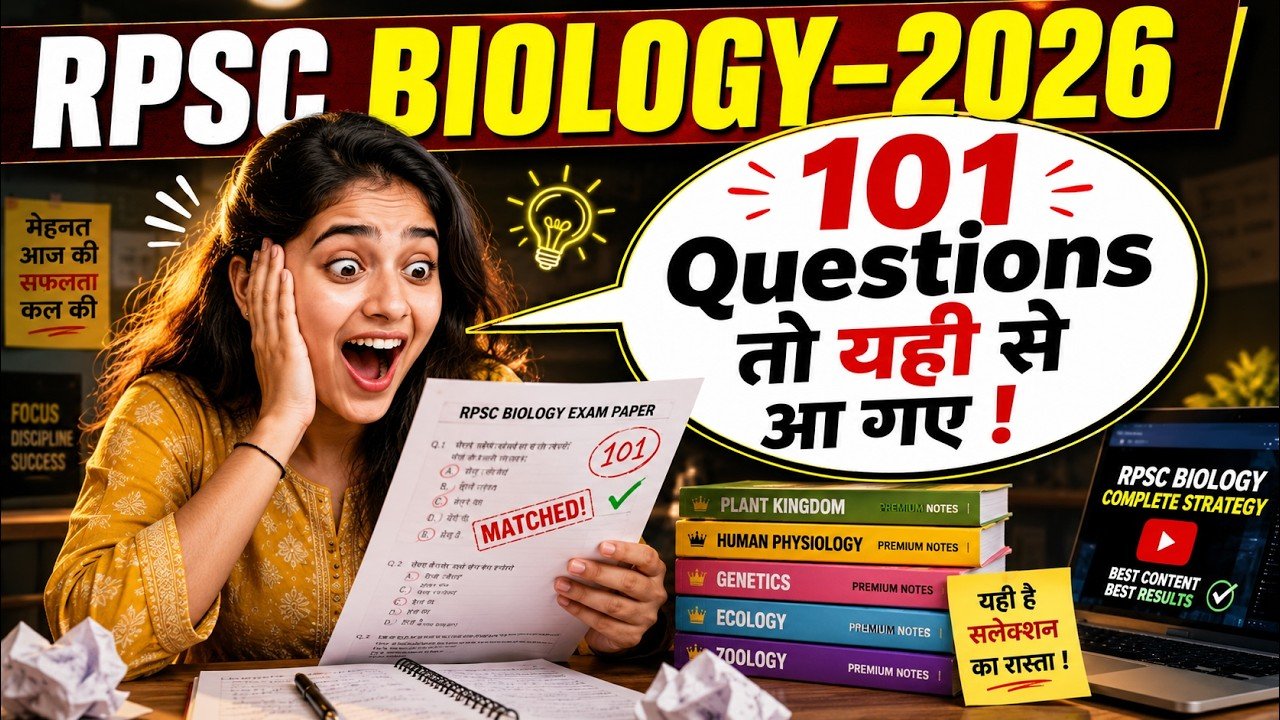
The RPSC School Lecturer Biology 2026 examination was highly anticipated by Biology aspirants across Rajasthan. After the exam, candidates immediately began reviewing the question paper to evaluate the difficulty level, identify important topics, and compare the paper with their study materials. One of the most talked-about discussions was the comparison claiming that 101 questions matched with iGuruJi material.
For future aspirants, paper analysis is an excellent way to understand exam trends and improve preparation strategies. While such comparison claims should always be verified by reviewing the official question paper and the referenced study material, they can provide useful insights into syllabus coverage and topic importance.
This article analyzes the Biology paper, highlights the major topics asked, and explains what candidates can learn from the comparison with iGuruJi material.
Importance of RPSC Biology Paper Analysis
Paper analysis helps candidates move beyond simply checking answers. It allows aspirants to understand:
- Overall difficulty level
- Topic-wise weightage
- Frequently repeated concepts
- Nature of conceptual and factual questions
- Preparation gaps
- Effectiveness of study resources
Every serious candidate should study previous papers before preparing for the next examination.
Understanding the “101 Questions Matched” Claim
Several candidates and coaching institutes have discussed a comparison suggesting that 101 questions were covered in iGuruJi study material, including classroom notes, revision booklets, test series, and practice papers.
A “matched question” may refer to:
- An identical question
- A similar concept
- A question from a mock test
- A topic covered in revision notes
- A concept explained during classroom discussions
Candidates should compare the official question paper with the relevant material themselves to determine how closely the concepts align.
Difficulty Level of the Biology Paper
Overall, the paper was considered moderate to moderately difficult.
The question paper included:
- Direct theoretical questions
- Concept-based MCQs
- Application-oriented Biology questions
- Diagram-based concepts
- Recent scientific developments
- Standard syllabus-based questions
Students with a clear understanding of Biology concepts generally found the paper balanced.
Major Topics Covered
Cell Biology
Several questions were asked from:
- Cell membrane
- Cell organelles
- Cell cycle
- Cell division
- Biomolecules
This continues to be one of the most important units in the syllabus.
Genetics
Genetics contributed a significant number of questions.
Important areas included:
- Mendelian Genetics
- Mutation
- Linkage
- Population Genetics
- Chromosomal abnormalities
Candidates with strong conceptual preparation performed well in this section.
Molecular Biology
Questions focused on:
- DNA replication
- RNA transcription
- Translation
- Gene regulation
- Protein synthesis
These chapters remain consistently important in competitive examinations.
Biotechnology
Biotechnology once again received good weightage.
Topics included:
- PCR
- Recombinant DNA Technology
- Tissue culture
- DNA fingerprinting
- Genetic engineering
Future aspirants should expect similar questions.
Plant Physiology
Several questions tested concepts related to:
- Photosynthesis
- Respiration
- Mineral nutrition
- Plant hormones
- Water transport
Conceptual understanding proved more valuable than memorization.
Human Physiology
Questions covered:
- Nervous system
- Endocrine glands
- Digestive system
- Respiratory system
- Reproductive Biology
These chapters have remained important in previous examinations as well.
Ecology and Environment
Environmental Biology continues to receive increasing attention.
Important topics included:
- Biodiversity
- Ecosystem
- Ecological succession
- Environmental pollution
- Conservation Biology
Candidates should not neglect Ecology while preparing.
Why Comprehensive Study Material Matters
Quality study material generally follows the official syllabus and emphasizes high-weightage concepts.
Good Biology preparation resources usually include:
- Complete syllabus coverage
- Topic-wise notes
- Previous year questions
- Practice MCQs
- Mock tests
- Revision booklets
- Diagram practice
Regular revision of such resources improves concept retention and exam confidence.
Importance of Mock Tests
Mock tests remain one of the most effective preparation tools.
Benefits include:
- Better time management
- Higher accuracy
- Identification of weak areas
- Improved confidence
- Familiarity with the exam pattern
Candidates should attempt multiple full-length tests before the examination.
Lessons from the Paper Analysis
Whether or not every claimed match is verified, the paper highlights several important lessons.
Complete the Official Syllabus
Avoid selective preparation. Questions can come from every section.
Strengthen Concepts
Modern competitive exams focus more on conceptual understanding than rote learning.
Revise Consistently
Regular revision improves long-term retention.
Solve Previous Year Papers
Previous papers help identify:
- Frequently asked topics
- Question trends
- Difficulty level
- Important concepts
Prepare Concise Notes
Maintain short notes covering:
- Scientific names
- Diagrams
- Definitions
- Classifications
- Biological processes
These notes become invaluable during the final revision.
Common Mistakes to Avoid
Many aspirants lose valuable marks because of simple mistakes.
Avoid:
- Ignoring the official syllabus
- Studying without revision
- Depending entirely on memorization
- Skipping mock tests
- Ignoring previous year papers
- Poor time management
A balanced preparation strategy consistently produces better results.
Preparation Strategy for Future Aspirants
A structured study plan can improve performance.
Suggested daily schedule:
- Biology concepts: 5–6 hours
- Previous year papers: 1 hour
- Mock tests: 1 hour
- Revision: 2 hours
- Diagram practice: 30–45 minutes
Consistency is more important than occasional long study sessions.
Final Thoughts
The RPSC School Lecturer Biology Paper Analysis 2026 provides valuable insights into the examination pattern and the importance of concept-based preparation. The reported comparison of 101 questions matched with iGuruJi material has generated considerable discussion among aspirants. Regardless of individual comparison results, candidates should always verify such claims by comparing the official question paper with the relevant study material.
The biggest takeaway from this analysis is that success in RPSC Biology depends on comprehensive syllabus coverage, conceptual clarity, repeated revision, and regular practice with previous year papers and mock tests. Aspirants who combine disciplined preparation with quality study resources are better positioned to perform well in future RPSC School Lecturer Biology examinations.
Frequently Asked Questions (FAQs)
1. What does “101 questions matched” mean?
It generally refers to questions that are claimed to have been covered through study material, revision notes, classroom discussions, or mock tests. Candidates should verify the comparison themselves.
2. Was the RPSC Biology 2026 paper difficult?
Most candidates considered the paper moderate, with a balanced mix of direct and concept-based questions.
3. Which Biology topics carried the highest weightage?
Cell Biology, Genetics, Molecular Biology, Biotechnology, Plant Physiology, Human Physiology, and Ecology were among the major areas.
4. Are previous year papers important?
Yes. They help candidates understand question patterns, identify frequently tested topics, and improve exam readiness.
5. What is the best preparation strategy for RPSC School Lecturer Biology?
Complete the official syllabus, revise regularly, solve previous year papers, attempt mock tests, and focus on conceptual understanding rather than rote memorization.