
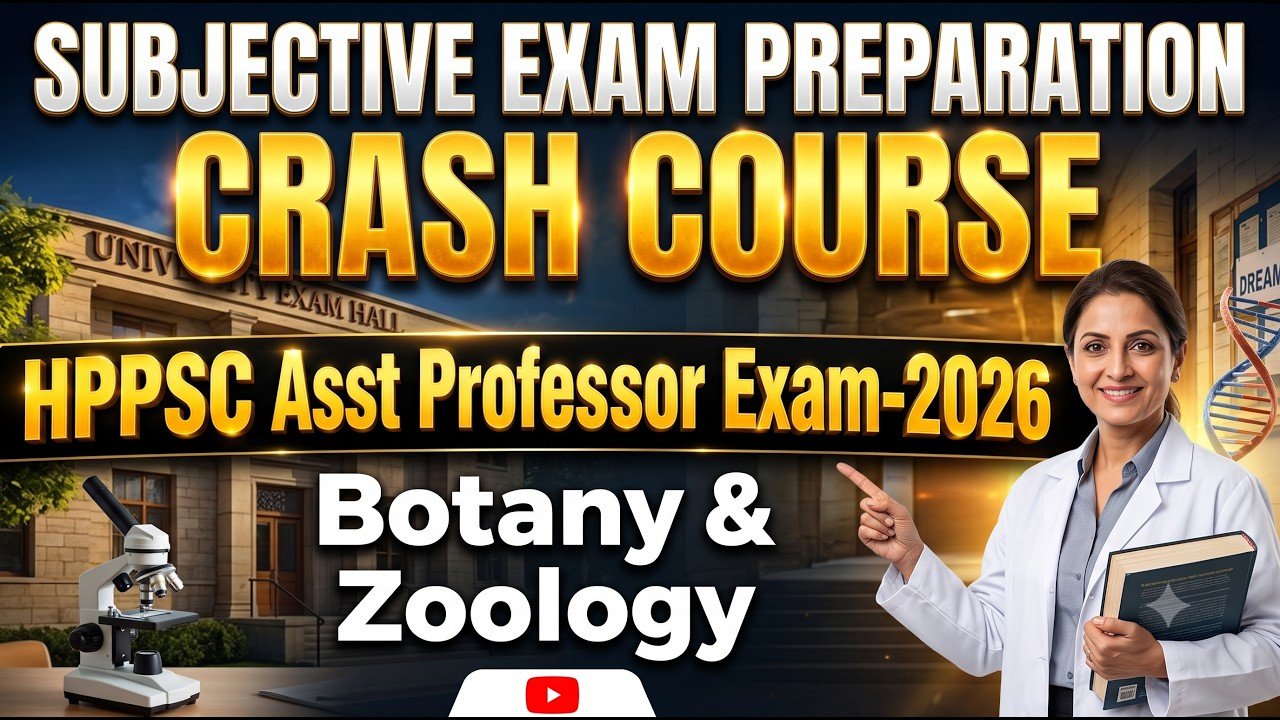
The HPPSC Assistant Professor Examination is one of the most competitive recruitment exams for candidates aspiring to secure a teaching position in Government Colleges of Himachal Pradesh. While strong subject knowledge is essential, many aspirants lose valuable marks because of poor answer-writing skills. This is where a HPPSC Subjective Practice Series becomes an important part of preparation.
A well-designed subjective practice series helps candidates develop the ability to write structured, analytical, and high-scoring answers within the allotted time. It also improves conceptual understanding and boosts confidence before the examination.
In this guide, you’ll learn why a subjective practice series is important, its benefits, and how it can help you achieve success in the HPPSC Assistant Professor examination.
What is the HPPSC Subjective Practice Series?
The HPPSC Subjective Practice Series is a structured answer-writing program designed according to the latest syllabus and examination pattern. It allows candidates to practice descriptive questions similar to those asked in the actual examination.
The practice series generally includes:
- Topic-wise subjective questions
- Full-length mock tests
- Model answers
- Answer-writing evaluation
- Expert feedback
- Revision assignments
- Performance analysis
Regular practice improves both writing quality and conceptual clarity.
Why is a Subjective Practice Series Important?
Many candidates prepare the syllabus thoroughly but struggle to present their knowledge effectively during the examination.
A subjective practice series helps you:
- Improve answer presentation
- Develop logical thinking
- Write precise and structured answers
- Complete the paper on time
- Gain confidence before the exam
- Identify weak topics
Success depends not only on what you know but also on how effectively you present your answers.
Benefits of Joining a Subjective Practice Series
1. Improves Answer Writing Skills
Writing descriptive answers regularly helps candidates learn how to organize information in a clear and logical manner.
Good answers generally include:
- Introduction
- Concept Explanation
- Relevant Examples
- Diagrams (where applicable)
- Conclusion
This format makes answers more impressive.
2. Better Time Management
Many aspirants fail to complete the paper within the given time.
Regular practice teaches you:
- How much time to spend on each question
- How to prioritize questions
- How to maintain writing speed
- How to complete the paper on time
3. Strengthens Conceptual Understanding
Writing answers requires deeper understanding than solving objective questions.
During practice, candidates revise concepts from:
- Cell Biology
- Genetics
- Molecular Biology
- Biotechnology
- Ecology
- Evolution
- Plant Physiology
- Animal Physiology
Repeated revision improves long-term retention.
4. Expert Evaluation
One of the biggest advantages of a practice series is professional feedback.
Experts evaluate:
- Content quality
- Accuracy
- Answer structure
- Scientific terminology
- Presentation
- Diagram quality
This helps candidates continuously improve.
5. Builds Examination Confidence
The more you practice, the more comfortable you become with descriptive papers.
Confidence reduces examination stress and improves performance.
Features of an Ideal HPPSC Subjective Practice Series
A quality practice series should include:
- Latest HPPSC syllabus
- Topic-wise assignments
- Full-length descriptive tests
- Model answers
- Expert evaluation
- Personalized feedback
- Performance reports
- Regular revision tests
Choosing a structured practice program ensures systematic preparation.
Preparation Strategy Along with the Practice Series
Before starting answer writing, complete the major topics of your subject.
Prepare Short Notes
Create concise notes containing:
- Definitions
- Scientific names
- Flowcharts
- Important diagrams
- Classification tables
These notes help during revision.
Practice Daily
Write at least one descriptive answer every day.
Daily writing improves:
- Speed
- Accuracy
- Presentation
- Confidence
Analyze Your Mistakes
After every test, review your answers carefully.
Check:
- Missing concepts
- Incorrect facts
- Poor presentation
- Time management
Learning from mistakes is essential.
Revise Regularly
Revision should continue alongside answer writing.
A simple revision cycle includes:
- Daily revision
- Weekly revision
- Monthly revision
Repeated revision strengthens memory.
Common Mistakes to Avoid
Many candidates lose marks because of simple mistakes.
Avoid:
- Writing lengthy introductions
- Ignoring keywords in questions
- Poor handwriting
- Lack of diagrams
- Unstructured answers
- Missing conclusions
- Skipping revision
- Poor time management
Simple improvements can significantly increase your score.
Daily Study Plan
A balanced preparation schedule may include:
- Subject Study – 5 Hours
- Answer Writing Practice – 2 Hours
- Revision – 2 Hours
- Previous Year Papers – 1 Hour
- Self-Evaluation – 30 Minutes
Consistency is more important than studying long hours occasionally.
Who Should Join the Practice Series?
The HPPSC Subjective Practice Series is ideal for:
- First-time aspirants
- Candidates appearing for HPPSC Assistant Professor
- UGC NET qualified candidates
- Ph.D. scholars preparing for teaching jobs
- Candidates wanting to improve descriptive answer writing
- Aspirants looking for expert guidance
Final Month Strategy
During the last month:
- Attempt full-length mock papers
- Revise short notes
- Practice important diagrams
- Focus on weak areas
- Improve answer presentation
- Maintain good health and sleep
Avoid starting new books during the final revision phase.
Final Thoughts
The HPPSC Subjective Practice Series is an excellent tool for candidates aiming to excel in the Assistant Professor examination. While conceptual knowledge is important, success also depends on presenting that knowledge effectively in descriptive answers.
Regular answer writing, expert feedback, continuous revision, and disciplined practice can significantly improve your performance. Combine the practice series with the latest syllabus, standard study material, and previous year papers to maximize your chances of success.
A focused preparation strategy and consistent effort will help you move one step closer to becoming an HPPSC Assistant Professor.
Frequently Asked Questions (FAQs)
1. What is the HPPSC Subjective Practice Series?
It is a structured answer-writing program designed to help candidates practice descriptive questions according to the latest HPPSC syllabus and exam pattern.
2. Who should join the practice series?
It is suitable for HPPSC Assistant Professor aspirants, first-time candidates, UGC NET-qualified candidates, and anyone looking to improve descriptive answer-writing skills.
3. Does answer writing improve exam performance?
Yes. Regular answer writing improves presentation, conceptual clarity, speed, and confidence, leading to better performance in descriptive examinations.
4. How many answers should I write daily?
Writing one to three quality answers every day, along with self-review or expert feedback, is generally recommended.
5. Is a subjective practice series enough for selection?
A practice series is highly beneficial, but it should be combined with complete syllabus coverage, regular revision, previous year papers, and mock tests for the best results.